
Ultrasound-Assisted Fat Preparation
Deep Fat Removal When Indicated
Potential Skin Retraction
Harvested Fat May Be Used for Grafting
Selected Superficial Contouring
VASER® is a brand of ultrasound-assisted liposuction used to remove selected subcutaneous fat and contour the body. A probe delivers ultrasound energy into fluid-infiltrated fat, after which the treated fat is suctioned through a cannula.
It is not a weight-loss treatment and cannot guarantee skin tightening, cellulite removal, muscle definition, or protection from injury to nearby structures. Bleeding, burns, seroma, contour irregularity, nerve injury, fluid imbalance, blood clots, fat embolism, organ injury, anesthesia complications, and revision can occur. Treatment area, volume, skin quality, health, and surgical setting determine suitability and recovery.
Harvested fat may sometimes be processed for grafting, but viability and graft survival are not guaranteed and the added procedure has separate risks.
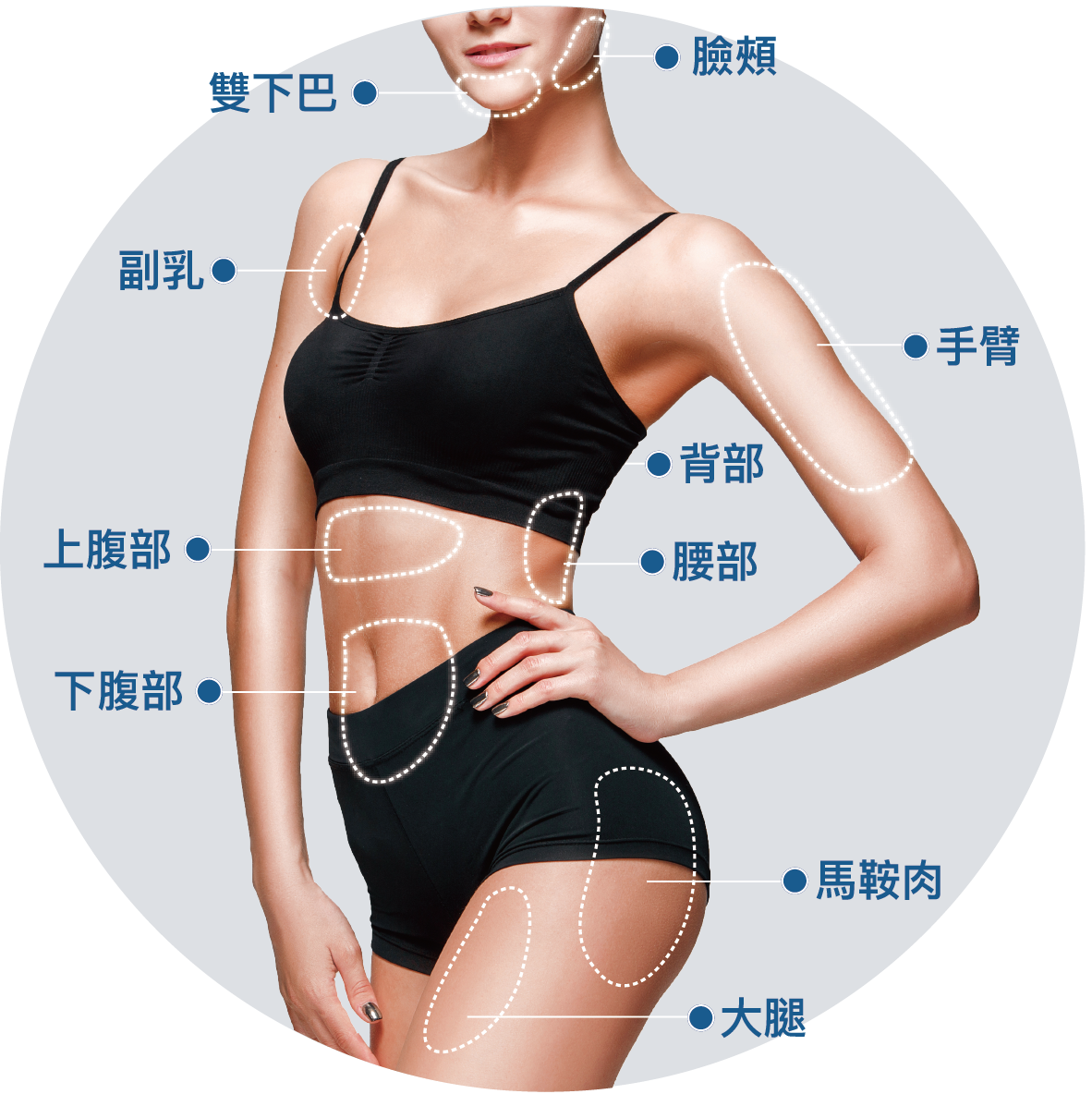
Face and Under-Chin
Abdomen and Waist
Thighs
Arms, Axillary Fullness, and Back
VASER® uses ultrasound energy before suction. The surgeon still needs to infiltrate fluid, protect the skin and deeper structures, control energy and temperature, and remove fat evenly. Large areas such as the abdomen and smaller areas such as the arms may be treated when appropriate; the safe volume and setting depend on the patient and plan.
| Feature | VASER® | Standard Suction-Assisted Liposuction |
|---|---|---|
| Fat Preparation | Ultrasound energy before suction | Mechanical cannula movement and suction |
| Possible Uses | Deep fat removal and selected superficial contouring | Deep fat removal and contouring with technique-dependent precision |
| Energy Risks | Thermal injury, seroma, and ultrasound-probe injury | No ultrasound-specific thermal risk |
| Skin Retraction | Depends on skin quality, age, volume removed, technique, and healing; neither method guarantees tight skin | |
| Bleeding and Recovery | Vary by area, volume, technique, health, compression, and complications; either method can cause substantial bruising or swelling | |
| Fat Grafting | Harvested fat may sometimes be used after assessment and processing; graft survival is not guaranteed | |
The clinic’s Chinese source content states that it uses the VASER 2.2 platform, including multi-ring probes and a VASER Smooth handpiece. These tools offer different energy delivery and tissue-handling options; they do not by themselves guarantee faster surgery, smooth contours, less bleeding, or greater safety. Ask the clinic to confirm the device, operator training, maintenance, and procedure plan for your case.
Related Chinese-language article: VASER 2.2 and earlier-generation VASER.
Cost depends on the number and size of areas, surgical complexity, anesthesia, facility, compression garments, follow-up, and whether fat grafting is added. The historical ranges below come from the Chinese source page and are not a current quote.
| Area | Standard Liposuction | VASER® |
|---|---|---|
| Arms | TWD 40,000–60,000 | TWD 100,000–150,000 |
| Back | TWD 80,000–100,000 | TWD 120,000–160,000 |
| Calves | TWD 40,000–90,000 | TWD 100,000–120,000 |
| Thighs | TWD 100,000–120,000 | TWD 240,000–300,000 |
| Waist and Abdomen | TWD 120,000–200,000 | TWD 240,000–300,000 |
Confirm the current written quote and what it includes. Related Chinese-language article: Understanding liposuction costs.
Liposuction may be deferred or avoided with uncontrolled cardiovascular or metabolic disease, significant clotting or thrombotic risk, active infection, poor wound healing, certain medication or allergy concerns, pregnancy, or other conditions that make anesthesia or fluid shifts unsafe. High BMI can increase risk, but no single BMI number replaces individualized assessment.
Related Chinese-language article: Liposuction complications and revision.
Visible bruising and swelling often improve over 1–2 weeks, while firmness, numbness, edema, and contour continue changing for several months. Return to work and exercise depend on the treated area, volume, anesthesia, and complications. Wear compression only as fitted and directed; an overly tight garment can injure skin, nerves, or circulation. Massage or device-based aftercare should begin only after the surgeon examines the wound and confirms it is appropriate.


Photos are published with the subject's consent and authorization. Surgical results may vary depending on individual conditions.
VASER® applies ultrasound energy to fluid-infiltrated fat before cannula suction. Standard liposuction relies on mechanical cannula movement and suction without that ultrasound step. Outcomes and complication rates depend heavily on patient selection, surgeon, area, volume, facility, and technique. VASER® adds ultrasound-specific burn, seroma, and probe-injury risks and does not guarantee less bleeding, pain, or recovery.
It can. Skin retraction depends on age, elasticity, stretch marks, prior weight change, the volume removed, superficial technique, and healing. Ultrasound assistance does not guarantee tight skin or prevent cellulite and irregularity. Significant excess skin may require a separate excisional procedure.
Removed fat cells do not simply regenerate, but remaining cells can enlarge with weight gain and untreated areas can also change. Hormones, medications, aging, and lifestyle affect body shape. Liposuction is contour surgery, not protection against future weight gain or treatment for visceral fat.
Sometimes. The surgeon must assess fat quality, processing, contamination control, and the recipient area. VASER® harvest does not guarantee viability or graft survival. Breast, buttock, face, and tear-trough grafting each have separate risks, including infection, fat necrosis, lumps, asymmetry, vascular occlusion, and fat embolism.
Suitability depends on health, area, volume, and anesthesia. Report cardiovascular disease, diabetes, hypertension, seizures, clotting or thrombotic disorders, abnormal scarring, allergies, kidney or liver disease, sleep apnea, prior surgery, and all medicines and supplements. Do not stop aspirin, anticoagulants, hormones, or other prescriptions without the prescribing physician. Active infection should be treated first. Elective surgery is generally deferred during pregnancy; breastfeeding requires assessment. Patients under 18 need a legal representative. Avoid smoking and alcohol as instructed, follow fasting rules, and arrange an adult escort. Obesity can raise anesthesia, wound, fluid, and clot risks; BMI is considered with overall health rather than used alone.
Visible bruising and swelling often improve over 1–2 weeks, but firmness, numbness, edema, and contour can change for several months. Return to work, driving, exercise, and lifting depends on area, volume, anesthesia, wound status, and complications. Massage or device-based treatments should begin only after examination and approval.
Take medicines and attend follow-up as directed. Contact the clinic urgently for heavy bleeding, rapidly increasing swelling, severe pain, fever, pus, shortness of breath, chest pain, fainting, one-sided leg swelling, confusion, or reduced urination. Keep incisions clean and dry until cleared. Wear the fitted compression garment as instructed; loosen it and seek advice for numbness, color change, blistering, or severe pressure. Avoid smoking, alcohol, soaking, swimming, heavy lifting, and strenuous exercise for the specified period. Do not begin massage or stop medicines without medical advice.
Possible complications include bleeding, infection, scars, delayed healing, seroma, hematoma, burns, skin loss, numbness, chronic pain, asymmetry, loose skin, contour irregularity, pigmentation, and revision. Anesthesia reaction, local-anesthetic toxicity, fluid imbalance, kidney or heart strain, deep-vein thrombosis, pulmonary embolism, fat embolism, organ perforation, severe infection, and death are uncommon but serious. Prompt assessment is essential for breathing difficulty, chest pain, fainting, high fever, confusion, severe pain, or rapidly worsening swelling.
This information is for reference only. Treatment must be assessed by a physician based on each person's condition. Results and risks vary; consult a qualified physician and follow medical advice.