
Limited Downtime With Gradual, Predictable Timing
Softens Dynamic Expression Lines
Reduces Activity and Bulk in Selected Muscles
Helps Control Excessive Sweating
Botulinum toxin type A is a purified neurotoxin protein. When injected into selected muscles, it temporarily reduces the release of acetylcholine at the neuromuscular junction, decreasing muscle contraction.
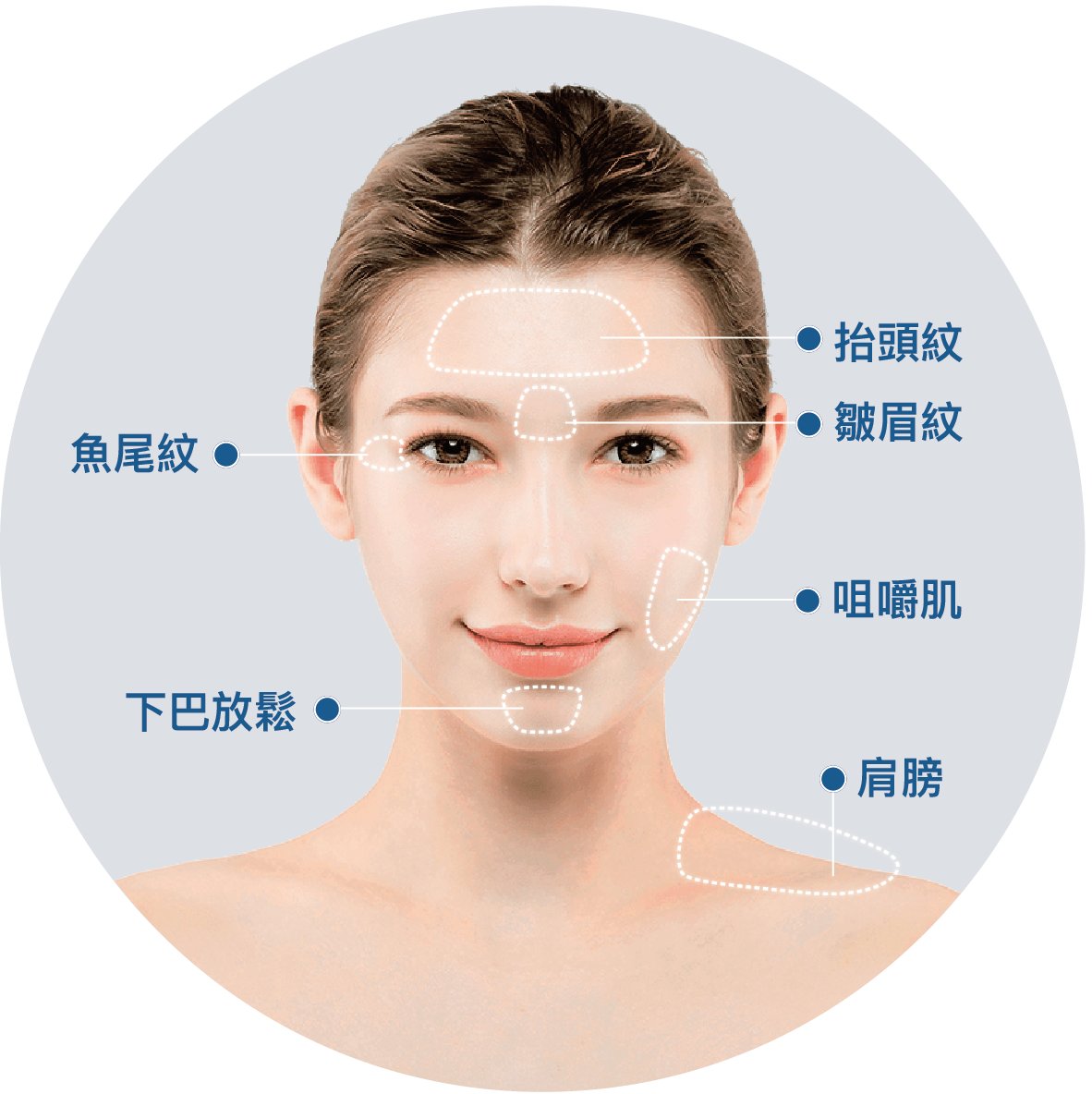
It can be used for dynamic facial lines such as forehead lines, crow’s feet, frown lines, and bunny lines. It can also reduce activity in enlarged muscles, including the masseters, trapezius, or calves, to refine contours. Results and duration vary by treatment area, dose, muscle strength, and individual response.
Masseter Reduction
Dynamic Facial Lines
Trapezius Contouring
Common cosmetic uses include forehead, frown, bunny, crow’s-feet, and chin lines; masseter reduction and selected lower-face contouring; reducing excessive nostril movement; and reducing bulk in the trapezius or calf muscles. Medical uses can include focal excessive sweating or underarm odor associated with sweating. Suitability and dosing vary by anatomy and function.
Results for expression lines and muscle reduction often last about 3–6 months. Duration varies with the treatment area, dose, muscle strength, metabolism, frequency of prior treatment, and individual response.
Possible reasons include insufficient dose for the muscle strength, injection points that do not match the target muscle, or a concern caused mainly by fat or bone rather than muscle. Rarely, reduced response can occur after repeated exposure. Product storage, handling, and authenticity also matter. A qualified physician should reassess the diagnosis, timing, dose, and product before recommending a change or repeat treatment.
It can if injection points or dose do not match the anatomy, muscle strength, and desired movement. Our physicians assess facial expression and use individualized, distributed dosing where appropriate. Even with careful technique, temporary asymmetry, heaviness, or unintended weakness can occur and should be discussed before treatment.
Botulinum toxin temporarily reduces muscle contraction. As the effect wears off, the muscle gradually returns toward its previous activity and dynamic lines can reappear. Stopping treatment does not generally make wrinkles worse than they would otherwise have been; the treated area gradually returns toward its baseline movement.
People with a known allergy to the selected product or its ingredients, active infection or inflammation at the injection site, or certain neuromuscular disorders such as myasthenia gravis may not be suitable. Treatment is generally avoided during pregnancy and breastfeeding. Tell the physician about all medical conditions, medications, and supplements, especially medicines that affect neuromuscular transmission. Do not stop prescribed aspirin or blood thinners without consulting the prescriber.
Follow the clinic’s instructions for your treatment area. Common guidance includes avoiding rubbing or firm massage of the injection sites and strenuous exercise for the first 24 hours. Your clinic may also advise remaining upright for several hours and avoiding facials, excessive heat, saunas, steam rooms, or swimming for a short period. After masseter treatment, follow any specific eating or activity advice provided by your physician.
Temporary bruising, redness, swelling, tenderness, headache, localized weakness, asymmetry, heaviness, or altered expression can occur. Effects in nearby muscles may cause eyelid or brow droop, chewing difficulty, or other functional changes, depending on the area. Rarely, toxin effects may spread and cause generalized weakness, difficulty swallowing, speaking, or breathing; seek urgent medical care if these symptoms occur.
This information is for reference only. Treatment must be assessed by a physician based on each person's condition. Results and risks vary; consult a qualified physician and follow medical advice.