
Concealed or Subciliary Incision
A Less Tired Under-Eye Contour
Addresses Skin Laxity When Indicated
Fat Repositioning for Selected Tear Troughs
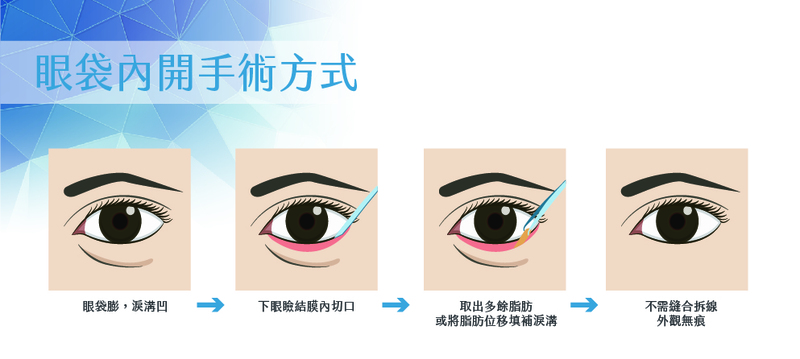
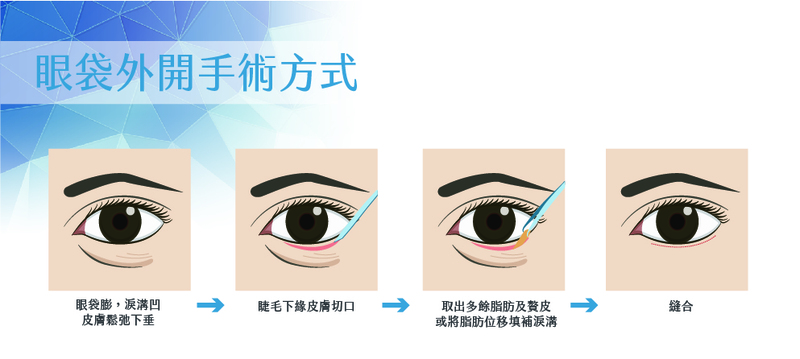
Lower eyelid bag surgery addresses protruding orbital fat beneath the eyes. A transconjunctival approach places the incision inside the lower eyelid and is often considered when skin laxity is limited. A transcutaneous approach places an incision just below the eyelashes and can also address excess skin or muscle laxity.
Fat may be conservatively removed or repositioned into a selected tear-trough hollow. The operation cannot stop aging or correct every cause of dark circles, and excessive fat or skin removal can cause hollowing, eyelid retraction, or ectropion. The approach is selected after examining skin, support, eye surface, fat distribution, and prior procedures.
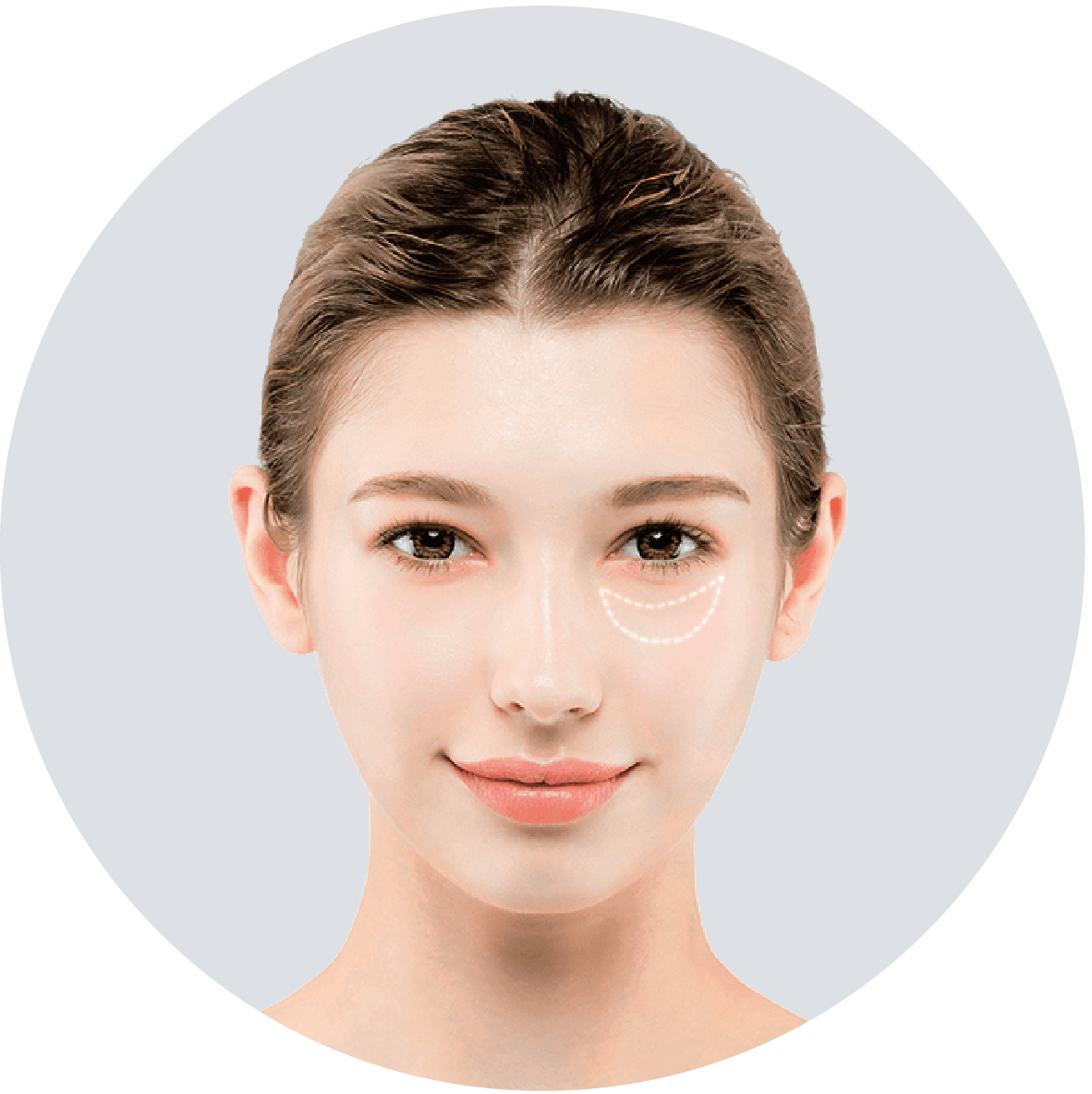
Lower Eyelid Bags
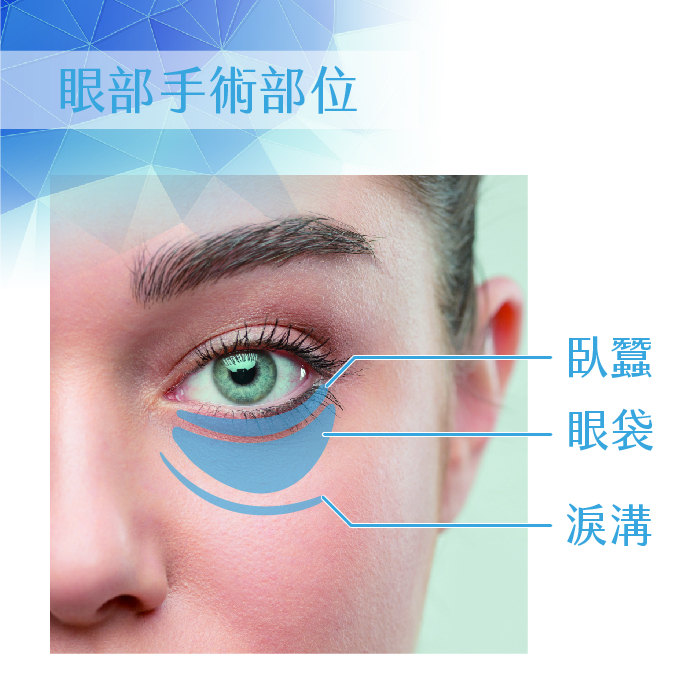
Under-eye roll: The orbicularis muscle immediately beneath the lower eyelashes can become more visible with smiling. It is different from protruding orbital fat.
Eyelid bag: Fullness below the under-eye roll that may remain visible at rest. It commonly reflects protruding orbital fat and reduced support, but swelling and other conditions require differential diagnosis.
Tear trough: A groove below and toward the inner side of the eyelid bag. Its shadow can accentuate dark circles and fullness.
| Method | Transconjunctival | Transcutaneous |
|---|---|---|
| Often Considered For | Fat protrusion with limited skin laxity | Fat protrusion with skin or muscle laxity |
| Incision | Inside the lower eyelid | Just below the eyelashes |
| Can Address | Fat removal or repositioning | Fat, selected skin and muscle, and support when indicated |
| Anesthesia | Local anesthesia, sometimes with sedation depending on the plan | |
| Typical Surgery Time | About 1 hour | About 1–1.5 hours |
| Visible Recovery | Often about 1 week | Often about 1–2 weeks; settling takes longer |
| Skin Suture Removal | Usually not required | Usually required |


Photos are published with the subject's consent and authorization. Surgical results may vary depending on individual conditions.
The transconjunctival approach is often considered for fat protrusion with limited skin laxity. The transcutaneous approach may better address skin or muscle laxity and may include support procedures. Age alone does not determine the method; eye-surface health, lower-eyelid support, anatomy, prior surgery, and goals all matter.
The under-eye roll is orbicularis muscle close to the eyelashes, while an eyelid bag is deeper fat below it. Standard fat adjustment does not intentionally remove the roll, but swelling, anatomy, muscle handling, and the extent of surgery can temporarily or permanently change its appearance.
The transconjunctival incision is inside the eyelid and leaves no external skin scar. The transcutaneous method leaves a scar just below the eyelashes; it commonly becomes subtle but can remain red, firm, pigmented, raised, or wider than expected. Scar behavior varies and no incision is scarless.
No. True orbital-fat protrusion and substantial laxity are most directly changed by surgery, but allergies, fluid retention, thyroid disease, pigmentation, visible vessels, or mild hollows need different evaluation and treatment. Fillers and devices do not remove excess fat or skin and have their own risks.
Removed fat does not simply grow back, but the remaining fat, skin, muscle, ligaments, bone, and overall face continue to age and body weight can change. Many results remain visible for years; a fixed 5–10-year duration cannot be guaranteed. Recurrence or another concern may later require treatment.
Yes. Excessive skin removal, scarring, weak support, prior surgery, or healing can pull the lower eyelid downward or outward. Conservative planning and support procedures reduce but do not eliminate risk. Persistent exposure, tearing, dry eye, pain, or incomplete closure needs prompt review and may require revision.
Bruising and swelling are usually most noticeable during the first week and often improve over 1–2 weeks. Residual swelling, firmness, scars, and asymmetry can continue changing for several months. Recovery is longer after combined skin or support work and varies by healing.
Suitability depends on health, eye condition, and anesthesia. Report diabetes, seizures, bleeding disorders, abnormal scarring, allergies, cardiovascular disease, dry eye, thyroid eye disease, glaucoma, vision problems, and prior eye or facial surgery. Active infection or inflammation should be treated first. Elective surgery is generally deferred during pregnancy; breastfeeding requires assessment. Patients under 18 need a legal representative. Provide all medicines and supplements—including aspirin and anticoagulants—and do not stop them without the prescribing physician. Avoid smoking and alcohol as instructed, follow fasting rules if sedation is used, remove makeup and contact lenses, and arrange an adult escort.
Use medicines, cold compresses, saline cleaning, and ointment only as instructed. Keep the wound clean and dry until cleared. Contact the clinic for increasing swelling, redness, bleeding, pus, fever, severe pain, vision change, headache, or nausea. Avoid rubbing, contact lenses, hot springs, swimming, soaking, smoking, alcohol, and strenuous activity for the specified period. Protect the scar from sun and do not start or stop medicines without advice.
Possible complications include bleeding, infection, prolonged swelling, scarring, asymmetry, contour irregularity, under- or overcorrection, hollowing, persistent bags, fat necrosis, eyelid retraction or ectropion, incomplete closure, dry eye, tearing, double vision, numbness, vision change, and need for revision. Severe pain, rapidly increasing swelling, or visual symptoms require urgent assessment.
This information is for reference only. Treatment must be assessed by a physician based on each person's condition. Results and risks vary; consult a qualified physician and follow medical advice.