
Non-Invasive Treatment Without Incisions
Initial Firming With Minimal Downtime
Supports Collagen Remodeling and Skin Firmness
Dedicated Tips for Face, Eyes, and Body
Thermage® FLX is a non-invasive monopolar radiofrequency (RF) treatment that delivers controlled volumetric heating into the dermis and subcutaneous tissue while cooling the skin surface. The heat can create immediate collagen contraction and support gradual collagen remodeling, improving the appearance of skin laxity and selected lines.
It does not surgically lift or remove skin. The degree and timing of change vary with tissue thickness, laxity, treatment area, energy delivery, and individual response.
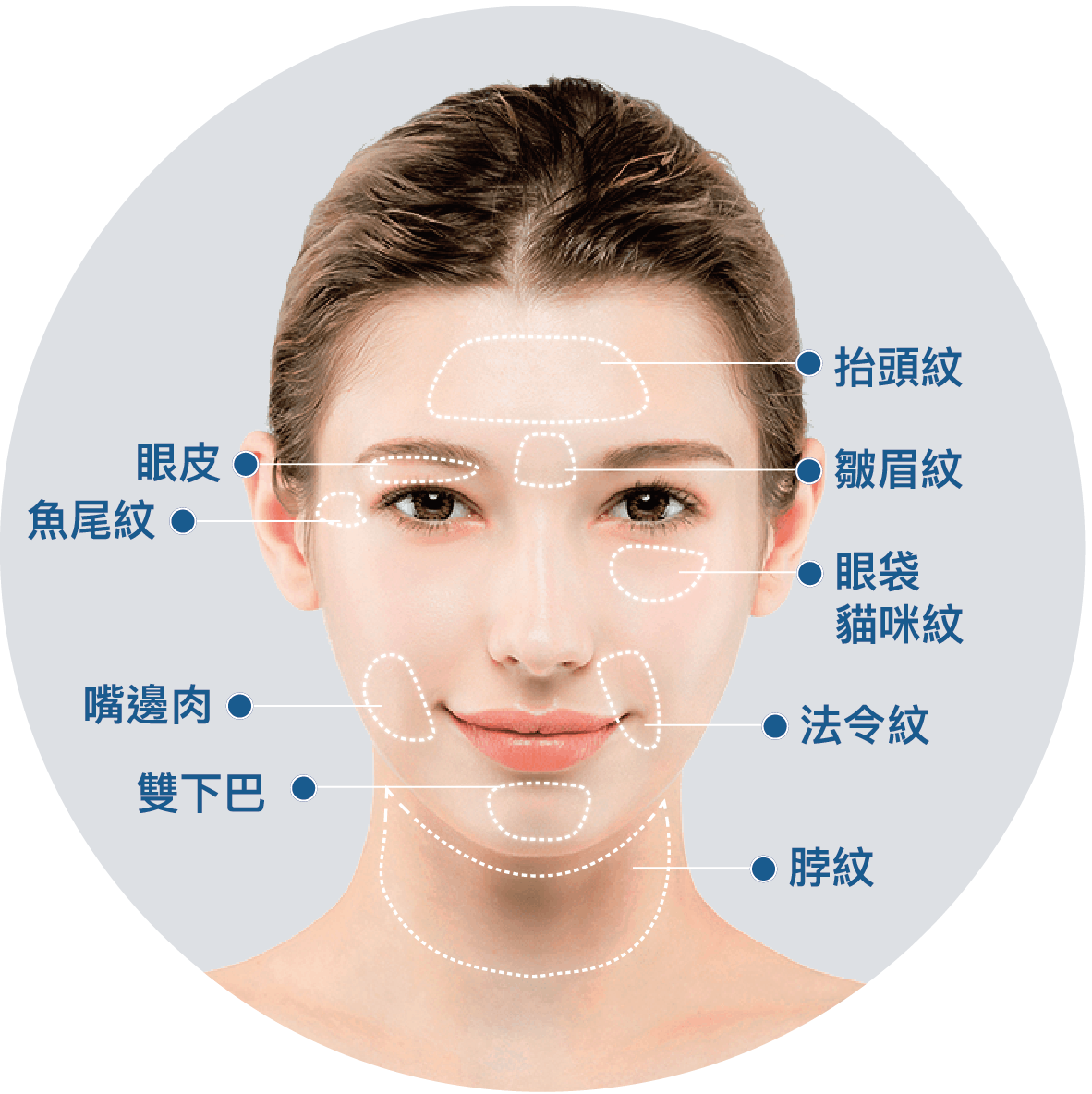
Forehead
Eye Area
Jawline
Neck
| Method | Monopolar RF | HIFU | Thread Lift |
|---|---|---|---|
| Typical Appointment | About 1–2 hours | About 1 hour | About 1 hour |
| Incisions | Non-invasive |
Non-invasive |
Needle-entry points |
| How It Works | Volumetric RF heating across selected tissue | Focused ultrasound heating at selected depths | Mechanical lifting with threads |
| When Changes Appear | Initial firming may be noticeable |
Initial firming may be noticeable |
Immediate mechanical lift |
| Downtime | Generally minimal; temporary redness, swelling, or tenderness may occur | Generally minimal; temporary swelling or tenderness may occur | Often about 1–2 weeks |
| Typical Duration | Often around 1 year, with individual variation | Often around 1 year, with individual variation | Varies by thread, technique, and tissue response |
| Target Tissue | Dermis and selected subcutaneous tissue | Selected superficial, dermal, fascial, or subcutaneous depths | Placement plane depends on the thread and technique |
Compared with surgical lifting, Thermage FLX does not require an incision and usually has less downtime, but its degree of lifting is also more limited. Energy can be adjusted according to the treatment area, tissue thickness, and patient feedback. Face, eye-area, and body treatment require the appropriate genuine handpiece and individualized settings.
Both use heat but deliver it differently. Monopolar RF creates broader volumetric heating through the dermis and selected subcutaneous tissue. HIFU forms focused thermal points at selected depths, which may include dermal, fascial, or subcutaneous layers depending on the cartridge. The better option depends on tissue thickness, laxity, target area, and risk profile.
They can be combined in selected patients because they heat tissue in different patterns, but combination is not automatically better. The sequence, settings, and interval must account for treatment areas, tissue thickness, cumulative heat, prior procedures, and individual risk. A physician should decide whether same-day treatment or staged sessions are appropriate.
Some initial collagen contraction may be noticeable soon after treatment, while remodeling can continue for 3–6 months. Results often last around 1 year and sometimes longer, but duration varies with age, skin condition, treatment settings, and lifestyle. Maintenance timing should be based on reassessment rather than a fixed schedule.
Shot count depends on face size, treatment area, laxity, tissue thickness, treatment tip, and energy plan. More shots do not automatically mean a better result. The physician should plan coverage, overlap, energy, and comfort after assessing the face and device protocol.
Each RF pulse can feel like brief deep heat or stinging, alternating with surface cooling. Sensation varies by area and individual. Real-time feedback helps the physician adjust energy while maintaining effective tissue heating. Pain should not simply be endured, because excessive heat can increase the risk of burns or tissue injury.
Genuine Thermage tips are designed for specific areas and treatment patterns, including the eyes, face, and body. The physician selects the tip according to the anatomical area, tissue thickness, device generation, treatment goals, and contraindications. Tips are not interchangeable for every area.
Timing depends on the injectable product, injection plane, area, swelling, and RF settings. When treatments are performed at the same visit, RF is often completed before injections, but this is not appropriate for every product or area. If an injectable was placed previously, the treating physicians should confirm the product and date and decide on an appropriate interval rather than applying a universal one-month rule.
People with certain implanted electronic devices, metal or implants in the treatment area, active infection, open wounds, or significant inflammation may not be suitable. Elective treatment is generally deferred during pregnancy, and breastfeeding or immune conditions require individual assessment. Tell the physician about all implants, medical devices, prior fillers, surgery, medicines, and skin conditions.
Temporary redness, swelling, tenderness, itching, or altered sensation can occur and often improves over several days. Use gentle skincare, moisturizer, and sunscreen, and avoid picking or rubbing the area. For about one week, avoid excessive heat, saunas, steam rooms, and swimming, or follow the specific instructions given for your treatment response.
Possible effects include temporary redness, swelling, tenderness, bruising, numbness, or altered sensation. Less common complications include burns, blisters, skin injury, contour irregularity, fat atrophy, prolonged pain, pigment change, or nerve-related symptoms. Contact the clinic promptly if pain is severe or worsening, blisters develop, or you notice persistent weakness, numbness, or contour change.
This information is for reference only. Treatment must be assessed by a physician based on each person's condition. Results and risks vary; consult a qualified physician and follow medical advice.