
Limited Downtime With Immediate Visible Change
Softens Fine Lines and Restores Volume
Precise Facial Contouring
Fills Selected Hollows and Depressions
Hyaluronic acid (HA) is a clear, gel-like substance naturally present in the skin.
It helps the skin retain moisture and contributes to elasticity and volume. As we age, naturally occurring HA gradually decreases, which can contribute to dryness, reduced elasticity, wrinkles, laxity, and hollow areas.
HA filler injections can add volume beneath selected areas of the skin, soften the appearance of lines and hollows, and refine facial contours. Changes are visible immediately after treatment, although temporary swelling may affect the initial appearance.
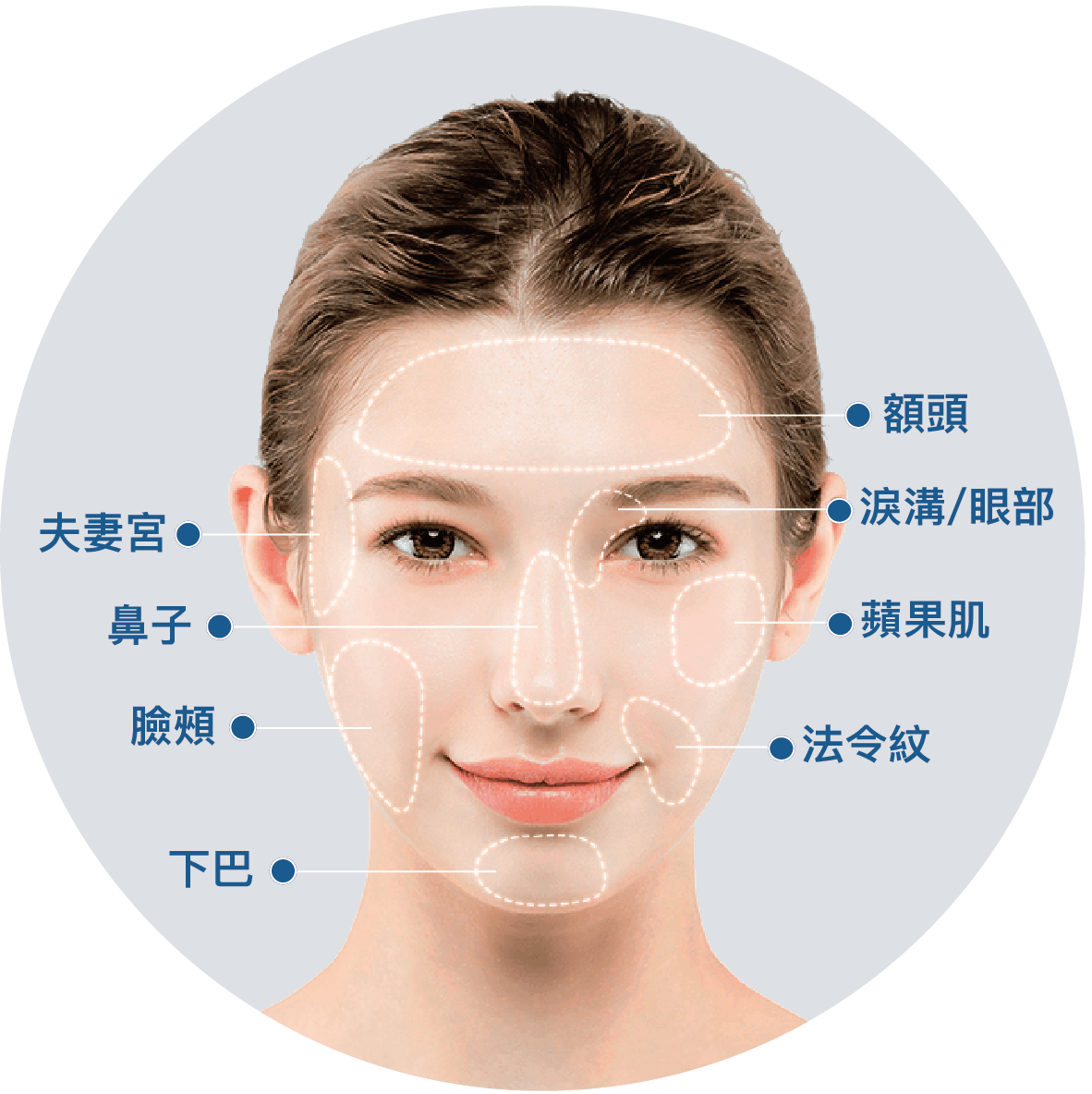
Nasal Bridge
Tear Troughs
Chin
Cheeks
Nasolabial Folds
Lips
Full Face
| Procedure | Hyaluronic Acid Fillers | Facial Fat Grafting |
|---|---|---|
| Procedure Time | About 20–30 minutes | About 1 hour |
| Entry Points | Needle-entry points | Needle-entry points |
| Typical Volume | Usually supplied in 1 mL syringes; amount varies | A larger volume can be transferred |
| Often Considered For | Precise adjustment of smaller areas | Broader volume restoration across multiple areas |
| Downtime | Usually limited |
About 7–14 days |
| Typical Duration | About 8–18 months, depending on product and area | Some transferred fat may be long-lasting after it stabilizes |
| Common Treatment Areas | Nose, cheeks, chin, forehead, temples, |
Cheeks, forehead, tear troughs, nasolabial folds, |
| Key Consideration | Does not require harvesting fat from another area | Uses your own tissue and can treat multiple areas |
Sapphire Plastic Surgery Clinic uses Restylane hyaluronic acid fillers sold in Taiwan under the local product names 亮采, 丰采, 晶采, and 漾采 (also marketed locally as 女神動態玻尿酸). Our physicians select the product, injection plane, and amount after assessing facial anatomy, movement, and treatment goals.
Common areas include the forehead, temples, forehead and frown lines, crow’s feet, tear troughs, cheeks, nose, earlobes, nasolabial folds, marionette lines, corners of the mouth, chin, and lips. Not every area or concern is suitable for filler; a physician should assess the anatomy, skin, and vascular risk before treatment.
Duration varies by product, particle characteristics, injection area, amount, metabolism, and lifestyle. As a general reference, softer products may last about 6–12 months, medium-support products about 8–14 months, and firmer products about 12–18 months. Your physician can explain the expected range for the specific product and area.
The amount depends on the treatment area, anatomy, degree of volume loss, product characteristics, and your goals. An in-person assessment is needed to estimate an appropriate amount. A staged approach may be recommended to maintain balanced, natural-looking results.
A natural result depends on product selection, placement, amount, and the injector’s understanding of facial movement. Our clinic uses Restylane OBT fillers marketed in Taiwan as 女神動態玻尿酸, which are designed with varying flexibility and support. The physician selects the product and amount according to the treatment area and your facial expression.
Facial fat grafting transfers fat from another part of the body and can restore volume across several areas at one time. Swelling takes time to settle, and the retained volume is assessed after the graft stabilizes. HA fillers allow smaller, precise adjustments with an immediately visible change, but they are temporary and may require repeat treatment. The better option depends on the amount of volume needed, available donor fat, desired downtime, and your goals.
Temporary swelling, redness, bruising, tenderness, or a tight sensation can occur and often improves over several days. Contact the clinic promptly if pain becomes severe or continues to worsen, or if you notice pale or mottled skin, marked swelling, or any visual changes, as these require urgent assessment.
The treated area can feel firmer or unfamiliar while early swelling settles and the filler integrates with surrounding tissue. This often softens with time. Do not massage the area unless instructed. Arrange a follow-up if a lump is painful, visible, increasing, associated with skin-color changes, or does not improve.
People with a known allergy to any ingredient in the selected product, those who are pregnant or breastfeeding, or those with active infection, allergy, or inflammation at the treatment site may not be suitable. Autoimmune conditions, immune disorders, implanted material in the area, and a history of severe allergy require individual medical assessment. Tell the physician about all medications and supplements. Do not stop prescribed aspirin or blood thinners without first consulting the prescriber.
Redness, swelling, tenderness, itching, or bruising can occur and often improves within 3–7 days. Cleanse and apply skincare gently, and avoid pressing or massaging the area for one week unless instructed otherwise. For about one week, avoid facials, strenuous exercise, alcohol, sleep deprivation, excessive heat, saunas, steam rooms, and swimming, or follow your clinic’s specific instructions.
Possible effects include temporary bruising, redness, swelling, tenderness, asymmetry, or lumps. Less common complications include infection, delayed inflammatory reactions, and vascular occlusion; vascular occlusion can rarely cause skin injury or vision loss. Choose a qualified physician using verified products, discuss risks before treatment, and seek urgent care for severe or worsening pain, pale or mottled skin, or any visual symptoms.
This information is for reference only. Treatment must be assessed by a physician based on each person's condition. Results and risks vary; consult a qualified physician and follow medical advice.