
Gradual Support for Age-Related Volume Loss
Stimulates the Body’s Own Collagen Response
Treats Broader Facial Hollows
Progressive, Natural-Looking Change
Sculptra® is an injectable collagen stimulator made with poly-L-lactic acid (PLLA). After injection into appropriate tissue planes, PLLA particles stimulate a gradual collagen response while the material itself is broken down over time.
Unlike a gel filler that provides most of its contour immediately, Sculptra is designed to create progressive changes over a series of treatments. It is biocompatible and biodegradable, but it can still cause adverse reactions and is not suitable for every area or patient. Treatment planning should be based on facial anatomy, degree of volume loss, product instructions, and individual risk.
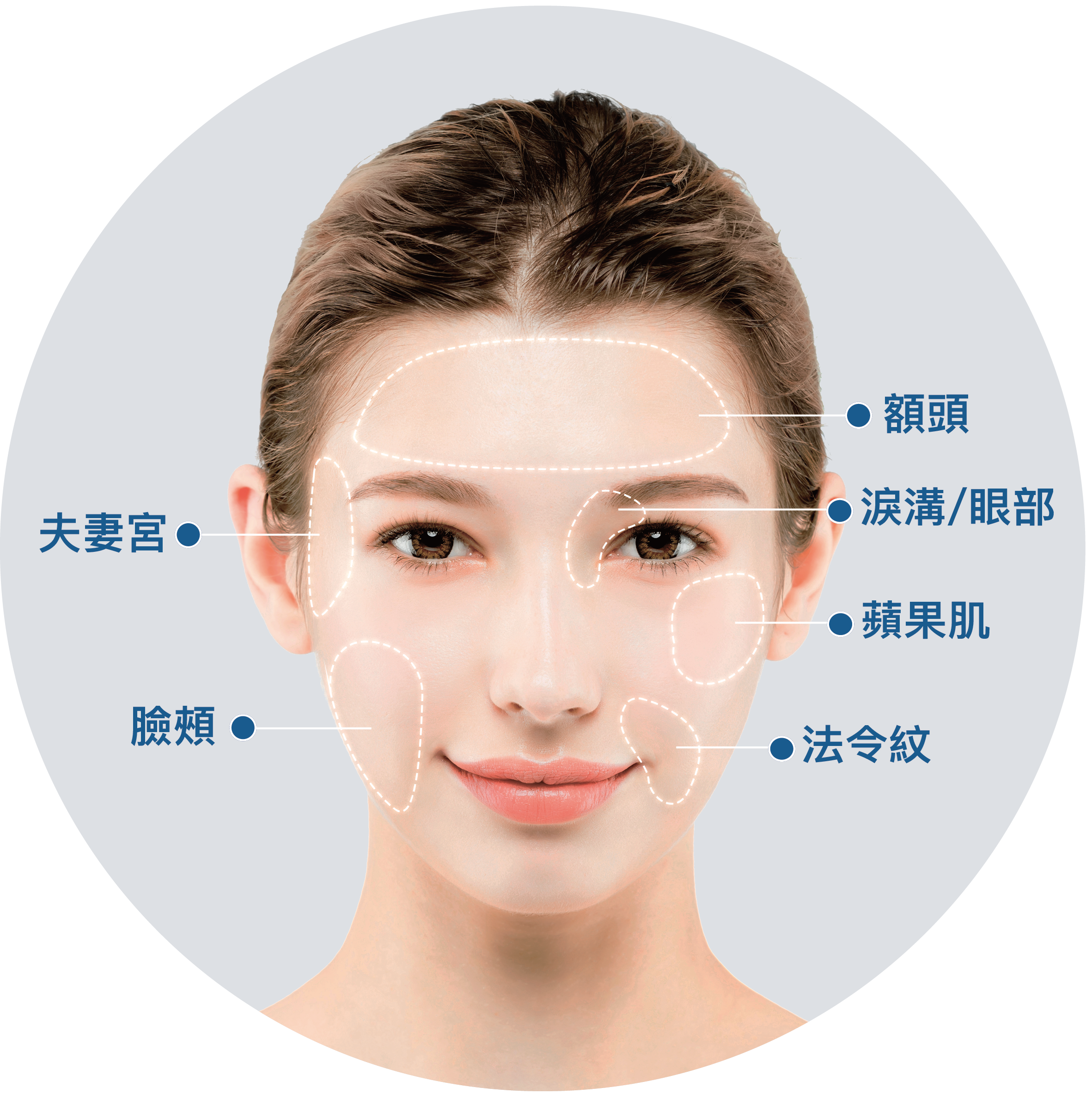
Superficial Appearance
Mid-Face Volume Support
Deeper Structural Support
Facial aging affects several tissue layers rather than a single line or hollow. Sculptra can be placed in selected deeper tissue planes to support gradual collagen formation and improve broader areas of volume loss. It is not intended as a precise substitute for every filler or surgical procedure.
| Product | Sculptra | Ellansé | AestheFill |
|---|---|---|---|
| Typical Appointment | About 20–30 minutes, excluding preparation | About 20–30 minutes | About 20–30 minutes, excluding preparation |
| Entry Points | Needle or cannula entry points | Needle or cannula entry points | Needle or cannula entry points |
| Material | Poly-L-lactic acid (PLLA) | Polycaprolactone (PCL) microspheres in a gel carrier | Poly-D,L-lactic acid (PDLLA) |
| How Volume Develops | Initial fluid disperses; collagen-related change develops gradually | Gel carrier gives immediate volume, followed by collagen stimulation | Initial fluid disperses; collagen-related change develops gradually |
| Massage | Follow the physician’s product-specific instructions | Usually not routine unless specifically instructed | Follow the physician’s product-specific instructions |
| Typical Duration | Changes may last up to about 2 years; individual results vary | Varies by the specific product and individual response | Varies by treatment plan and individual response |
| Commonly Considered Areas | Cheeks, temples, and selected broader facial volume loss | Selected facial folds and contours, according to product instructions | Cheeks, temples, and selected broader facial volume loss |
| Key Consideration | Gradual collagen stimulation; often planned as a treatment series | Immediate carrier volume plus collagen stimulation | Gradual collagen stimulation; reconstitution and placement matter |
Sculptra contains poly-L-lactic acid (PLLA) particles. After reconstitution and injection into appropriate tissue planes, the particles stimulate a controlled tissue response that supports new collagen formation. The carrier fluid is absorbed first, and collagen-related volume develops gradually while PLLA is broken down over time.
Sculptra is generally considered for broader age-related facial volume loss, including the temples, cheeks, and selected folds or contours. Collagen-related changes develop gradually, often over several months, and may last up to about two years in some patients. Timing and duration vary with treatment plan, anatomy, age, and individual response.
Sculptra is supplied as powder in a vial and reconstituted before use. The reconstitution volume is not the same as the dose of active product. The number of vials and sessions depends on the treatment area, degree of volume loss, age, anatomy, and response. A physician should plan treatment after an in-person assessment.
Sculptra works gradually, so evaluation too soon may miss the developing collagen response. Other factors include the degree and cause of volume loss, number of vials or sessions, injection plane and distribution, and individual response. Some people need a planned series rather than one session. Follow the physician’s massage and aftercare instructions, and attend follow-up before deciding on additional treatment.
Fat grafting transfers your own harvested fat and can restore a larger amount of volume in one procedure, but it requires a donor-site operation and retention is variable. Sculptra does not require fat harvesting and creates gradual collagen-related volume, often over a series of sessions. The better option depends on the amount needed, donor fat, downtime, desired timing, prior treatments, and individual risks.
Follow the instructions provided for the specific product and treatment area. If your physician recommends the 5-5-5 routine, massage the treated areas gently for five minutes, five times a day, for five days. Do not use excessive pressure, and stop and contact the clinic if massage causes increasing pain, marked swelling, skin-color changes, or other concerning symptoms.
The fluid used for reconstitution can create temporary fullness immediately after treatment, but that initial volume usually subsides. Collagen-related change often becomes noticeable over the next 1–3 months and can continue developing for several months. Timing varies by age, treatment plan, and individual response.
People with allergy to Sculptra or its ingredients, active infection or inflammation at the treatment site, or certain immune conditions may not be suitable. Treatment is generally avoided during pregnancy and breastfeeding. Prior implants or fillers in the area require careful assessment. Tell the physician about all medical conditions, medicines, and supplements. Do not stop prescribed aspirin or anticoagulants without consulting the prescriber.
Redness, swelling, tenderness, itching, or bruising can occur and often improves over several days. Follow the prescribed massage routine, if any. For about one week, follow your clinic’s guidance regarding facials, strenuous exercise, alcohol, heat exposure, saunas, steam rooms, and swimming. Use gentle skincare, moisturizer, and sunscreen, and attend follow-up visits.
Temporary bruising, redness, swelling, tenderness, asymmetry, or palpable material can occur. Papules or nodules may develop early or months later, and some may require treatment. Infection, inflammation, and vascular occlusion are also possible. Sculptra cannot be dissolved with hyaluronidase. Seek urgent assessment for severe or worsening pain, pale or mottled skin, or any visual symptoms.
This information is for reference only. Treatment must be assessed by a physician based on each person's condition. Results and risks vary; consult a qualified physician and follow medical advice.