
A Defined Roll at Rest
Limited Access Incisions
Surgically Placed Tissue
Makeup After Wound Closure
The under-eye roll is the slight prominence of orbicularis muscle directly beneath the lower eyelashes, often more visible with smiling. Dermal graft under-eye roll augmentation places a strip of dermal tissue through small incisions to create or enhance this contour at rest.
This is surgery, not a filler injection. The graft source, processing, size, and exact placement must be confirmed during consultation. Swelling, scarring, asymmetry, contour irregularity, visibility, infection, absorption, or the need for revision can occur, and the procedure does not treat an eyelid bag or tear trough.

Under-Eye Roll
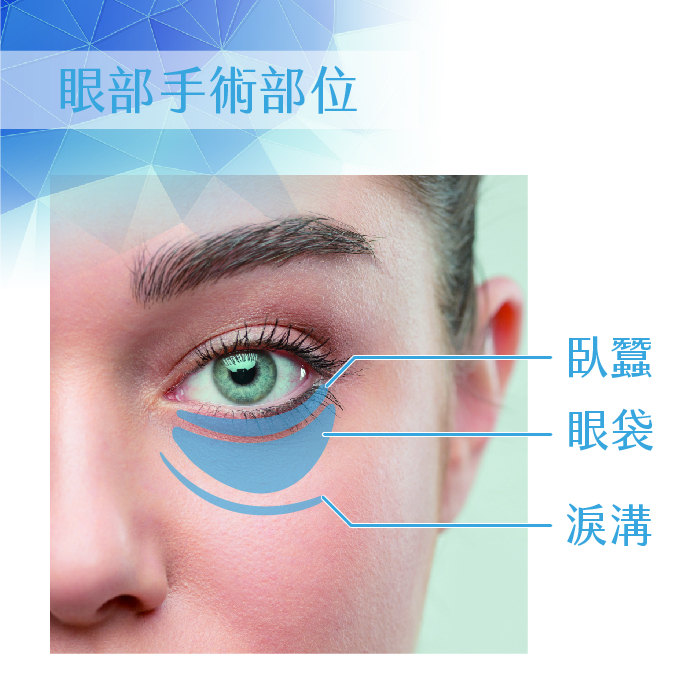
Under-eye roll: A narrow orbicularis-muscle prominence immediately below the lower eyelashes, often accentuated by smiling.
Eyelid bag: A broader fullness below the roll, commonly related to protruding orbital fat and support changes.
Tear trough: A groove below and toward the inner side of the eyelid bag. Shadows can make dark circles or fullness look stronger.
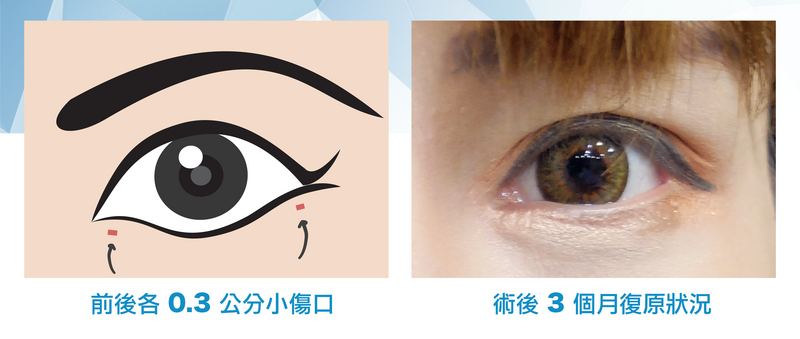
Small access incisions are made near the inner and outer lower eyelid, and a dermal graft is placed beneath the eyelashes. The planned length, width, and projection are matched to the eyelid. Early swelling can make the roll look larger or uneven; it may take several months to soften and settle.
Other eyelid procedures can sometimes be combined, but each has a separate indication and risk. Combining surgery generally increases swelling and recovery.
| Method | Dermal Graft Surgery | Hyaluronic Acid Filler |
|---|---|---|
| Procedure | Surgical placement of dermal tissue | Injection of a temporary gel |
| Considerations | Longer-lasting potential, but incisions, scars, graft absorption, and revision risk | No surgical incision, but swelling, lumps, migration, Tyndall effect, and vascular occlusion risk |
| Entry Site | Small incisions near the inner and outer eyelid | Needle or cannula punctures |
| Typical Time | About 1–2 hours | About 15–30 minutes |
| Visible Recovery | Often 1–2 weeks; settling takes months | Often mild for several days; bruising can last longer |
| Reversibility | Revision requires another procedure | Hyaluronic acid may be dissolved, but reversal is not risk-free |
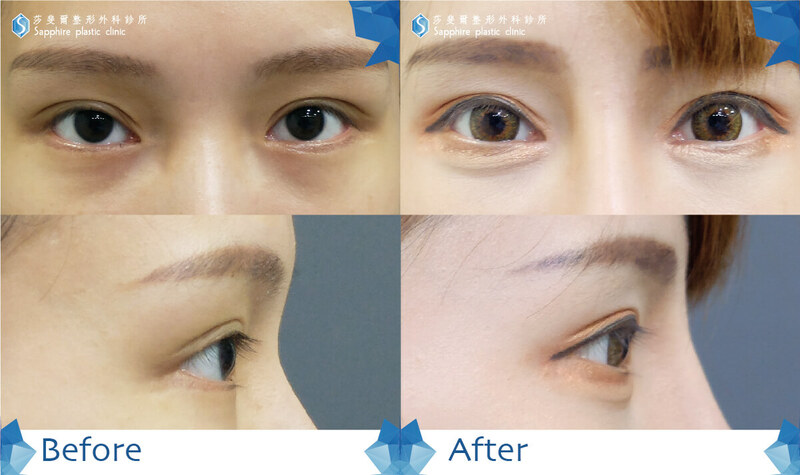
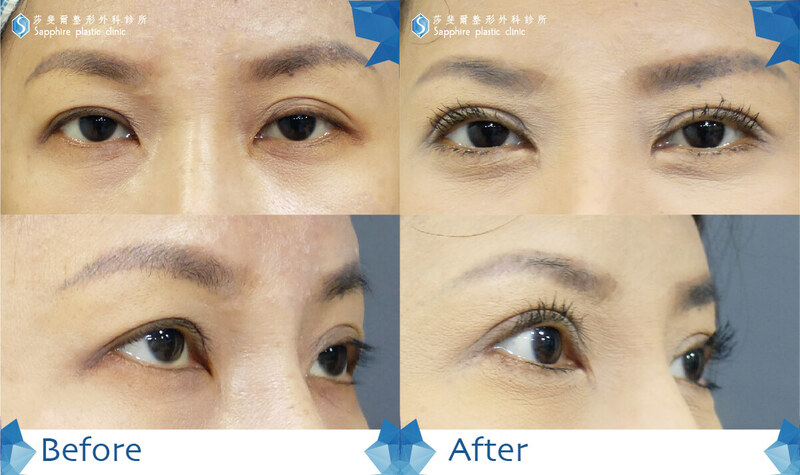
Dermal grafting is surgery with incisions, scars, longer recovery, absorption, and revision risk, but may provide longer-lasting structural volume. Filler is less invasive and temporary; it can cause swelling, lumps, migration, blue discoloration, infection, and rare vascular occlusion with skin injury or vision loss. Neither is universally better.
Swelling and bruising are expected and can look asymmetric during the first week. Many patients are more presentable after 1–2 weeks, but firmness, graft visibility, and contour can continue changing for several months. Do not apply makeup over an open or irritated wound.
Sometimes. The natural roll, skin thickness, eyelid bag, tear trough, smile dynamics, and baseline asymmetry must be assessed first. Adding too much volume can look heavy, accentuate an eyelid bag, or remain visible at rest.
It can sometimes be combined when both procedures have clear indications. Operating on upper and lower eyelids at once increases swelling, bruising, care needs, and overall risk. Staging may be safer when anatomy, dry eye, medical health, or the desired changes are complex.
An eyelid bag sits below the under-eye roll and can be made more prominent by added volume. The bag, tear trough, skin laxity, and swelling should be diagnosed first. Lower-eyelid surgery may be considered before or instead of augmentation, but fat should not be removed without a clear indication.
Fat is soft and survival is unpredictable in the very small, superficial under-eye roll. Irregular survival, lumps, visibility, or excessive fullness can occur, and removal can be difficult. A surgeon should compare no treatment, filler, dermal grafting, and other options for the anatomy.
Suitability depends on health, eye condition, graft material, and anesthesia. Report diabetes, seizures, bleeding disorders, abnormal scarring, allergies, cardiovascular disease, dry eye, thyroid eye disease, glaucoma, vision problems, and prior eye surgery. Active infection or inflammation should be treated first. Elective surgery is generally deferred during pregnancy; breastfeeding requires assessment. Patients under 18 need a legal representative. Provide all medicines and supplements—including aspirin and anticoagulants—and do not stop them without the prescribing physician. Avoid smoking and alcohol as instructed, follow fasting rules if sedation is used, remove makeup and contact lenses, and arrange an adult escort.
Use medicines, cold compresses, saline cleaning, and ointment only as instructed. Keep wounds clean and dry until cleared. Contact the clinic for increasing swelling, redness, bleeding, pus, fever, severe pain, vision change, headache, or nausea. Avoid rubbing, contact lenses, hot springs, swimming, soaking, smoking, alcohol, and strenuous activity for the specified period. Protect scars from sun and do not start or stop medicines without advice.
Possible complications include bleeding, infection, prolonged swelling, scarring, asymmetry, visible or palpable graft, contour irregularity, displacement, partial absorption, under- or overcorrection, granuloma, eyelid distortion, dry eye, irritation, numbness, vision change, and need for graft removal or revision. Severe pain, rapidly increasing swelling, or visual symptoms require urgent assessment.
This information is for reference only. Treatment must be assessed by a physician based on each person's condition. Results and risks vary; consult a qualified physician and follow medical advice.