
Injectable Treatment Without a Surgical Incision
Immediate Volume for Selected Contours
Restores Volume in Facial Hollows
Decellularized Matrix Designed for Tissue Compatibility
Soft-Tissue Support With Flexible Placement
Micronized acellular dermal matrix (ADM) is an injectable material derived from donated human dermis. During manufacturing, cells and selected immune components are removed while the extracellular matrix structure is retained, then the material is processed into fine particles.
After reconstitution, micronized ADM can be placed in selected soft-tissue areas to restore volume or support contours. It is a donor-derived implant material, not the patient’s own tissue, and results, integration, and duration vary. A physician should explain the product used, donor-tissue processing, expected benefits, alternatives, and risks before treatment.
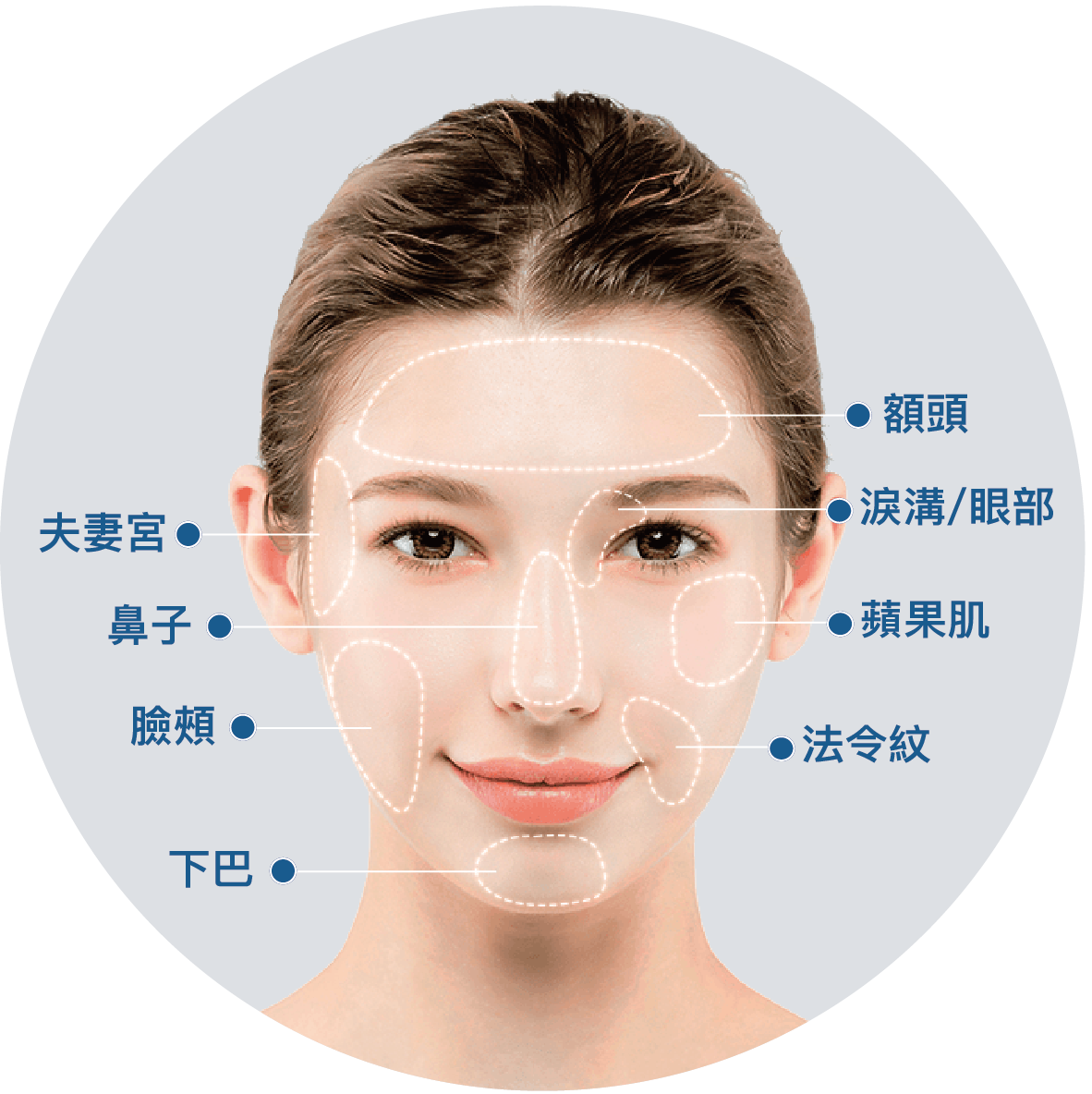
Temples
Nose and Nasal Bridge
Nasolabial Folds
Chin
Cheeks
Neck and Fine Lines
Age-related collagen and soft-tissue changes can make facial lines and hollows more visible. Micronized acellular dermal matrix may be used to restore volume in selected areas and refine facial contours. Suitability depends on anatomy, tissue quality, prior treatments, and the depth and cause of the concern.
| Procedure | Micronized ADM | HA Fillers | Facial Fat Grafting |
|---|---|---|---|
| Procedure Time | About 20–60 minutes, depending on area | About 20–30 minutes | About 1 hour or longer |
| Entry Points | Needle or cannula entry points | Needle or cannula entry points | Small harvest and injection entry points |
| Material and Amount | Reconstituted donor-derived acellular dermal matrix; amount varies | Hyaluronic acid gel; amount varies by area and product | Your own harvested fat; broader volumes can be transferred |
| Often Considered For | Selected small-area soft-tissue support and contouring | Precise adjustment of smaller areas | Broader or multi-area volume restoration |
| Downtime | Usually limited, with swelling or bruising possible | Usually limited, with swelling or bruising possible | Often about 7–14 days, depending on extent |
| Duration | Varies with material integration, area, and individual response | Often about 6–18 months, depending on product and area | Retained fat may be long-lasting after stabilization |
| Common Areas | Temples, cheeks, chin, nasolabial folds, |
Nose, cheeks, chin, forehead, temples, |
Cheeks, forehead, tear troughs, nasolabial folds, |
| Key Consideration | Donor-derived implant material; product selection and informed consent are important | Reversible with hyaluronidase for many HA products, but not risk-free | Uses your own tissue but requires fat harvesting and has variable retention |
It is a donor-derived human dermal material processed to remove cells and selected immune components while retaining extracellular matrix such as collagen structure. The material is sterilized, processed into particles, and reconstituted for injection. It provides a scaffold and soft-tissue volume, but integration and clinical results vary.
Donor screening, decellularization, sterilization, manufacturing controls, and lawful Taiwan registration are important safeguards, but no implanted or injected medical material is risk-free. Possible risks include swelling, bruising, infection, inflammation, nodules, asymmetry, poor integration, and vascular complications. Ask the clinic which registered product will be used and review its instructions and risks with the physician.
Sheet ADM is generally placed surgically as a graft or soft-tissue support over a broader area, sometimes around an implant. Micronized ADM is processed into particles, reconstituted, and injected through a needle or cannula for smaller or more detailed areas. They differ in form, placement, indications, and risks.
Possible areas include selected hollows of the forehead or temples, nasal bridge, chin, cheeks, nasolabial folds, and some fine static lines. Use around the nose and eyes requires particular caution because of vascular anatomy. Suitability depends on the product instructions, tissue condition, prior implants or fillers, and physician assessment.
Fat grafting uses your own harvested fat and can restore larger volumes across multiple areas, but it requires a donor-site procedure and retention is assessed after the graft stabilizes. Micronized ADM is donor-derived, can provide immediate volume in selected smaller areas, and does not require fat harvesting. The better option depends on the amount needed, treatment area, donor fat, downtime, implant preferences, and individual risks.
Duration varies with the specific material, treatment area, amount, preparation, tissue integration, and individual response. Micronized ADM should not be described as permanently or semi-permanently retained for every patient. Your physician should explain the evidence and expected range for the registered product actually used.
People with allergy or hypersensitivity to the selected product, active systemic or treatment-site infection, active inflammation, or certain immune conditions may not be suitable. Pregnancy, breastfeeding, severe allergy history, keloid tendency, cardiovascular disease, anticoagulant use, and significant psychiatric illness require individual assessment. Tell the physician about prior surgery, implants, fillers, medicines, and supplements. Do not stop prescribed aspirin or anticoagulants without consulting the prescriber.
Redness, swelling, tenderness, itching, or bruising can occur and often improves over several days. Follow the clinic’s instructions for cleansing, makeup, skincare, activity, alcohol, heat exposure, saunas, steam rooms, and swimming. Avoid pressing or massaging the area unless instructed. Contact the clinic for worsening pain, marked redness, fever, drainage, skin-color changes, visual symptoms, or other concerning changes.
Temporary bruising, redness, swelling, tenderness, asymmetry, or palpable material can occur. Other possible complications include infection, inflammation, nodules, poor integration, migration, tissue injury, and vascular occlusion. Injections around the nose or eyes can rarely cause serious skin or visual complications. Seek urgent assessment for severe or worsening pain, pale or mottled skin, or any visual symptoms.
This information is for reference only. Treatment must be assessed by a physician based on each person's condition. Results and risks vary; consult a qualified physician and follow medical advice.