
Implant Selection or Design Based on Anatomy
Designed for Smooth Contour Transitions
A Long-Lasting, Non-Absorbable Implant
Meaningful Projection in a Single Operation
Chin implant augmentation can improve a short or retruded chin and selected chin asymmetry by placing an implant over the front of the mandible. The implant’s width, projection, shape, and position are planned in relation to the nose, lips, jawline, bite, and overall facial proportions.
An implant changes soft-tissue contour but does not correct every skeletal or bite problem. Significant asymmetry, vertical excess, or malocclusion may require imaging and consideration of genioplasty or orthognathic treatment.
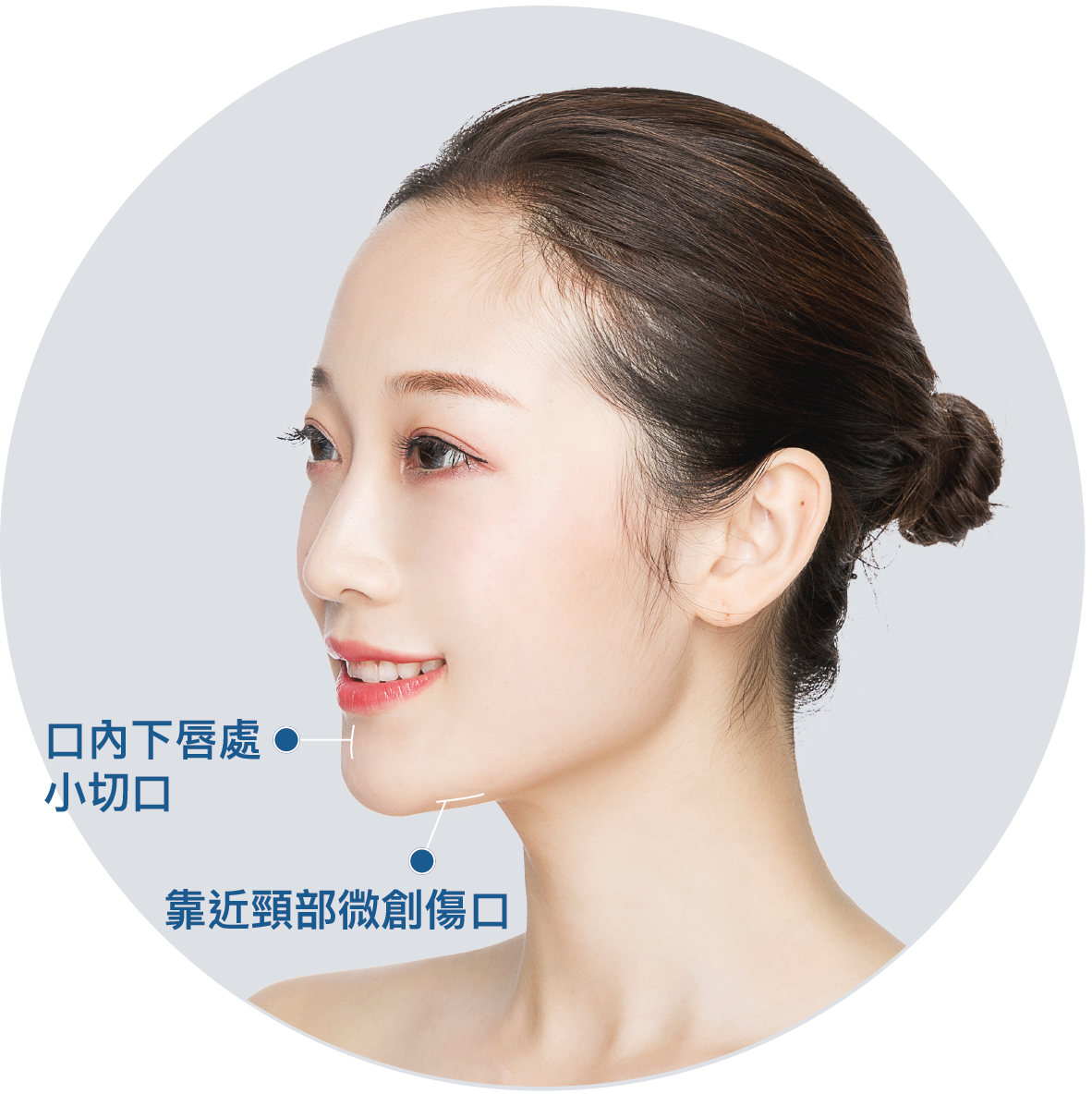
Intraoral Incision
Submental Incision

The lower third of the face and the relationship between the nose, lips, and chin influence profile balance. There is no single ideal E-line for every face; sex, ethnicity, dental occlusion, and individual preference should be considered.
A short, retruded, long, or asymmetric chin can affect overall facial balance. Chin implant planning should begin with the cause of the contour concern rather than a fixed beauty ratio.
Our physicians assess the existing chin, jawline, facial features, and bite before selecting or designing an implant. The goal is a proportionate contour that fits the individual face, not a standardized V shape.

Intraoral approach
A small incision is made inside the lower lip. The surgeon creates a pocket over the bone and places the selected implant on the front of the chin. This avoids an external skin scar but requires careful oral-wound care and carries risks including infection, implant malposition, and altered sensation.
Submental approach
A short incision is made in the crease beneath the chin. This approach provides direct access for pocket creation and implant placement and may be useful for broader implants or selected anatomy. It leaves an external scar, although it is positioned beneath the chin.
| Implant Type | Custom Rigid Implant | Silicone Implant | Composite Implant |
|---|---|---|---|
| Typical Surgery Time | About 1–1.5 hours | About 1–1.5 hours | About 1–1.5 hours |
| Visible Recovery | Often about 7–14 days; swelling continues longer | Often about 7–14 days; swelling continues longer | Often about 7–14 days; swelling continues longer |
| Potential Use | Can be designed for small or larger three-dimensional adjustments | Commonly used for selected mild-to-moderate projection | Used for selected smaller contour adjustments |
| Fixation and Movement | Fit and fixation are planned individually; movement remains possible | Pocket design and fixation affect movement risk | Pocket design and fixation affect movement risk |
| Key Considerations | Can be customized to anatomy |
Available in multiple shapes |
Material combines different structural properties |
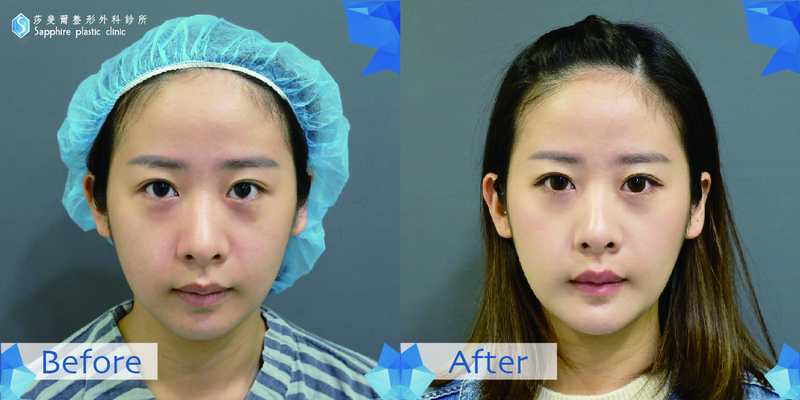
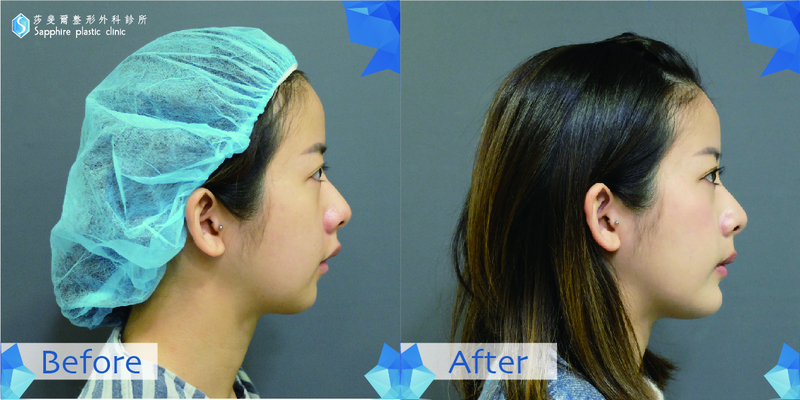
Options may include silicone, porous or rigid implants, and composite designs. They differ in flexibility, tissue interaction, fixation, ease of revision or removal, available shapes, and long-term behavior. No material is best for everyone. Confirm the exact material and manufacturer, and discuss anatomy, desired projection, incision, fixation, and revision options with the surgeon.
Movement risk depends on implant fit, pocket size, surgical approach, material, fixation method, early trauma, and healing. Some well-fitting implants can be placed without screws, while others benefit from fixation. Neither approach eliminates movement or nerve risk. The surgeon should explain why a specific fixation plan fits the implant and anatomy.
Possibly, but the surgeon needs the product name, injection date, amount, and location. Residual hyaluronic acid, calcium hydroxylapatite, PLLA, or other material can affect examination, imaging, pocket creation, infection risk, and implant position. The plan may include waiting, imaging, dissolving suitable HA filler, or removing material; timing is individualized.
Swelling and bruising are usually most noticeable during the first several days and often improve substantially over 1–2 weeks, but residual swelling and firmness can continue for weeks to months. Diet may need modification after an intraoral approach. Use cold compresses only as instructed, and contact the clinic for rapidly increasing swelling, bleeding, fever, drainage, breathing difficulty, or severe pain.
A non-absorbable implant can remain for many years and does not require routine replacement solely because of age. Long-term follow-up is still important. Infection, movement, bone erosion or pressure, contour change, trauma, or patient preference can make revision or removal necessary.
Yes, especially early in healing before scar tissue stabilizes the pocket. Avoid pressure and impact for the period instructed by the surgeon, often several weeks to months. Even after healing, strong trauma can move or damage an implant or surrounding tissue. Seek assessment after a significant impact or new asymmetry, pain, numbness, or mobility.
Fat grafting can add soft-tissue volume in selected areas but provides less rigid projection and less predictable shape than an implant or bony genioplasty. It may suit subtle contour blending rather than a chin that needs strong structural projection. Retention also varies. The appropriate option depends on anatomy and the desired change.
Suitability depends on individual health, surgical approach, and anesthesia requirements. Tell the physician about diabetes, seizures, bleeding disorders, keloids or abnormal scarring, drug allergies, cardiovascular disease, and any prior surgery or treatment in the area. Elective surgery is generally deferred during pregnancy; breastfeeding requires individual assessment.
Active infection, inflammation, allergy, or an unhealed wound at the surgical site should be treated and stabilized before surgery. Patients under 18 require a legal representative and assessment of physical development, actual need, and surgical suitability.
Provide a complete list of prescription medicines, over-the-counter medicines, supplements, herbal products, and hormonal medications, including acetaminophen products, aspirin, anticoagulants, and birth-control pills. Do not stop medicines on your own. Complete medication review no later than about two weeks before surgery when possible; any adjustment and timing must be decided by the prescribing physician, anesthesiologist, and surgeon.
Avoid smoking and alcohol before surgery because they can affect anesthesia and wound healing; follow the exact interval given by the medical team. If anesthesia is planned, follow the clinic’s fasting instructions because requirements differ by anesthesia type.
On the day of surgery, do not wear makeup, nail polish, contact lenses, jewelry, or other metal items. Wear loose clothing that is easy to change. Do not drive or ride a scooter home; arrange for an adult escort.
Report any other illness, allergy, recent symptoms, or medication use so the medical team can provide individualized advice.
Take prescribed medicines and attend follow-up visits. Contact the clinic promptly for abnormal swelling, spreading redness, bleeding, worsening pain, pus, fever, breathing difficulty, or other concerning symptoms. Use cold compresses, wound cleaning, ointment, and oral care only as instructed for your incision. Keep external wounds dry until cleared and protect healed scars from sun. Avoid hot springs, swimming, soaking, smoking, alcohol, impact, and resting the chin on your hand for the period specified by the surgeon. After an intraoral approach, use the recommended soft or liquid diet and oral hygiene routine. Do not stop or start steroids or other medicines without medical advice.
Possible complications include bleeding, hematoma, infection, poor wound healing, visible or widened scar, asymmetry, implant malposition or movement, extrusion, capsule formation, bone erosion or pressure, contour irregularity, altered lip or chin movement, numbness or nerve injury, dental-root injury, dissatisfaction, and need for revision or removal. An implant does not eliminate future aging or facial change. Review material-specific and approach-specific risks with a qualified plastic surgeon.
This information is for reference only. Treatment must be assessed by a physician based on each person's condition. Results and risks vary; consult a qualified physician and follow medical advice.